
Table of Contents:
RCS vs Traditional Marketing Channels: Why Messaging Is the New Conversion Engine
Published on
January 29, 2026
For decades, marketing has followed a familiar playbook: send out a message, hope it lands, and measure success in impressions and clicks. Email, paid ads, push notifications, and social media have all played their part, but they’re all fighting the same problem: declining attention.
As consumers tune out crowded channels and demand more relevant, real-time experiences, brands are beginning to rethink their approaches. That shift is fueling interest in conversational marketing channels, where engagement feels personal, immediate, and useful.
At the heart of this shift is messaging, and more specifically, RCS (Rich Communication Services). When looking at RCS vs traditional marketing channels, it’s clear that messaging is emerging as a new conversion engine and not just another channel to add to your tech stack.
The Decline of Attention in Traditional Channels
Traditional digital marketing channels still have scale, but they’re losing impact.
- Email inboxes are full of junk, leading to a sharp decline in open and click rates.
- Paid ads are increasingly expensive and easy to ignore.
- Push notifications compete aggressively for limited screen time and are often turned off entirely.
These channels are built for broadcasting (one message to many people) even as consumers expect relevance, timing, and interaction. This gap between how brands communicate and how customers want to engage is pushing marketers to rethink their messaging marketing strategy.
Comparing Reach, Engagement, and Cost Across Channels
When evaluating RCS marketing compared to other channels, three factors matter most: reach, engagement, and efficiency.
Reach
- Paid ads depend on algorithms and budgets.
- Email reach is limited by spam filters and inbox competition.
- Push notifications require app installs and opt-ins.
- RCS reaches users directly in their native messaging app, with no app download required.
Engagement
- Ads and emails are passive experiences.
- Push notifications are often dismissed.
- RCS messages invite interaction (taps, quick replies, guided actions, and more) within the conversation itself.
Cost Efficiency
As ad costs rise and email performance plateaus, messaging delivers stronger engagement without relying on auction-based pricing or constant creative refreshes.
This is why many brands are now comparing the trackable ROI boost that RCS brings to the table, and reallocating budget accordingly.
Why Messaging Outperforms Ads, Email, and Push
Messaging succeeds where other channels struggle because it directly aligns with how people already communicate.
1. It’s Intentional
Messages feel personal, not promotional. When a brand shows up in a conversation thread, especially with verified branding, it earns attention rather than fighting for it.
2. It’s Interactive by Design
Unlike emails or ads, messaging isn’t a dead end. RCS enables:
- Buttons and suggested replies
- Engaging video content
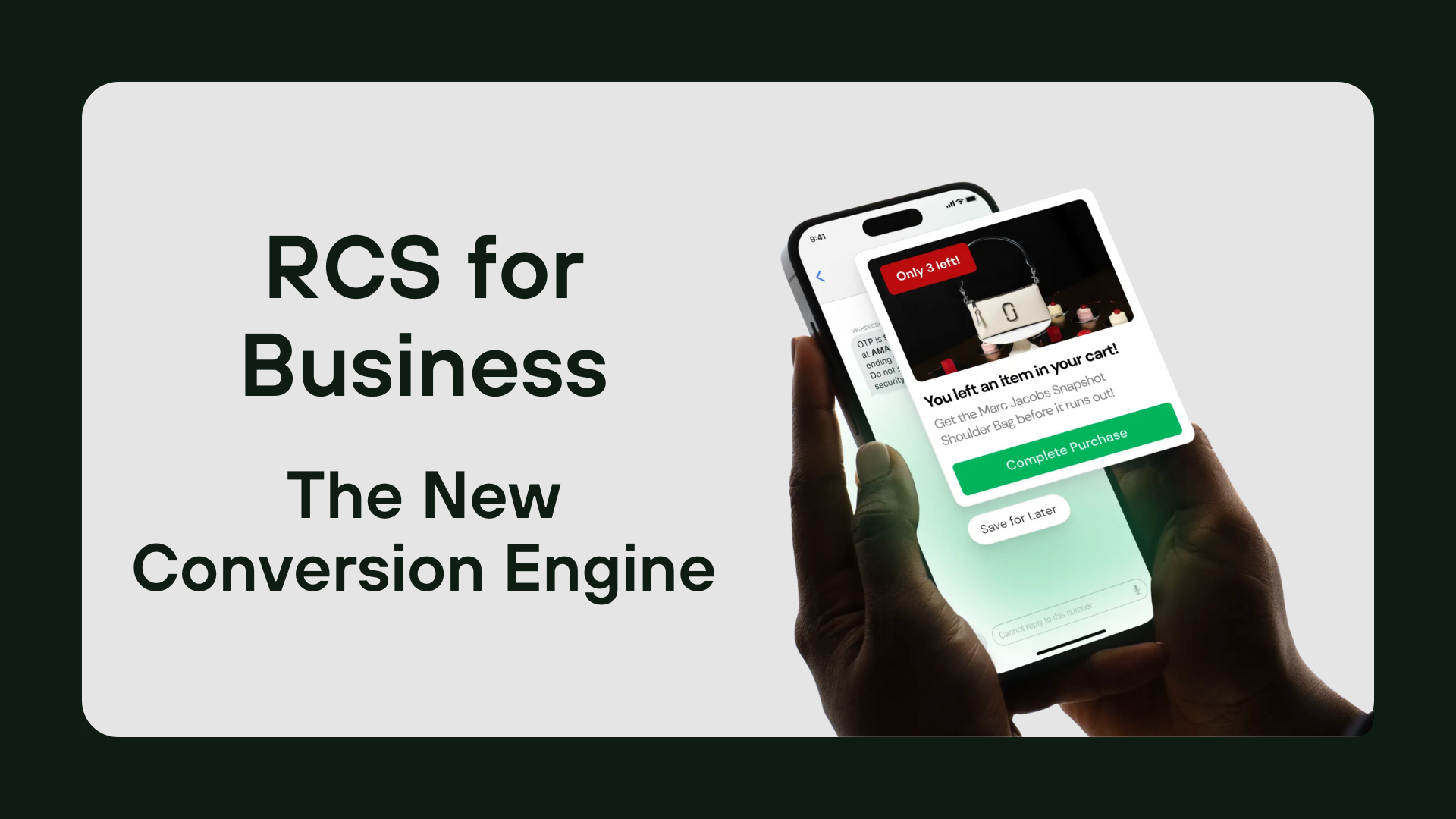
- Product carousels and rich cards
- Multi-step, guided journeys
Your audiences won’t just click your links and disregard them anymore, they’ll actually engage.
3. It’s Timely
Messaging supports real-time use cases, from promotions and reminders to onboarding and support, all within a single channel. This is the core advantage of conversational marketing: it turns engagement into momentum.
RCS as a Branded, Interactive, First-Party Channel
One of the biggest advantages of RCS is that it’s first-party by nature. With RCS, your brand will own:
- The customer relationship
- The data gathered from every interaction, helping you make informed decisions
- The presentation and content of the experience
RCS messages include verified sender information, logos, brand colors, and layouts that look and feel like a modern app, without requiring any downloads or app creation.
In the broader discussion of RCS vs traditional marketing, this matters because brands are moving away from rented attention (ads, algorithms, platforms) and toward owned, direct customer relationships.
Real-World Examples of Messaging-Led Funnels
RCS messaging isn’t just a top-of-funnel touchpoint either, it can support the entire customer journey. Common messaging-led funnels include:
- Discovery: Rich RCS campaigns showcasing products or offers
- Consideration: Interactive menus, FAQs, or guided flows
- Conversion: One-tap actions, confirmations, and follow-ups
- Retention: Updates, recommendations, customer feedback, surveys, and re-engagement
Instead of sending users elsewhere, RCS keeps them moving forward inside the conversation.
The Future: Conversational Commerce and AI + RCS
With buy-in from Apple and Android, RCS for Business messaging is ready to play an even bigger role in the future of mobile marketing.
As AI-powered assistants and automation mature, RCS is becoming the ideal interface:
- Conversational flows powered by AI tailored to your audience
- Personalized recommendations at scale based on previous interactions
- Seamless transitions from marketing to support to commerce
The result is a single, continuous conversation, not just a series of disconnected campaigns and hyperlinks.
Final Takeaway: Messaging Is Becoming the Conversion Layer
Traditional channels aren’t going away, but they’re no longer enough on their own. As attention is divided and customer expectations rise, messaging is emerging as the connective tissue between awareness, engagement, and conversion.
In the shift from broadcasting to conversation, RCS stands out as a channel built for the future.
See How RCS Fits Into Your Marketing Mix
If you’re evaluating RCS in comparison to traditional marketing and want to understand how messaging can drive real results across the funnel, seeing it in action will change the game.
Schedule a demo with nativeMsg to explore how RCS can complement and outperform email, ads, and push notifications as part of your modern messaging marketing strategy.