
Table of Contents:
For years, SMS has been the backbone of mobile marketing. It’s universal, reliable, and nearly impossible to ignore. But as customer expectations rise and mobile experiences become more visual and interactive, brands are starting to hit the ceiling of what text-only messaging can deliver.
RCS (Rich Communication Services) is the next generation of mobile messaging. In the conversation around RCS vs SMS, the question is no longer if rich messaging will replace traditional text campaigns, but when and where it makes the most sense.
Let’s break down what SMS marketing still does well, where it falls short, and why RCS messaging vs SMS is becoming a critical decision for modern brands.
What SMS Marketing Does Well
There’s a reason SMS marketing hasn’t gone away. It offers a few undeniable strengths:
1. Near-Universal Reach
SMS works on virtually every mobile phone, regardless of device, carrier, or operating system. No apps to download and no data connection required.
2. Speed and Simplicity
Messages are delivered instantly and read quickly. For time-sensitive communications like alerts, reminders, or one-time passcodes, SMS is still incredibly effective.
3. Familiarity
Consumers know what an SMS message looks like and how to interact with it. There’s no learning curve, which lowers friction for basic communications. SMS is dependable, but dependable doesn’t always mean effective, especially when the goal is engagement or conversion.
SMS Marketing Limitations
As consumer behavior has shifted toward richer, app-like experiences, the limitations of SMS marketing have become much harder to ignore.
1. No Branding
SMS messages come from short codes or phone numbers with no logos, brand colors, or visual identity. That lack of branding can reduce trust and make messages feel generic or even spammy.
2. Links Are the Only Interaction
With SMS, engagement usually means tapping a single link. There are no buttons, menus, or guided actions, just text and a URL.
3. Limited Storytelling
Text-only messages make it difficult to showcase products, promotions, or value propositions in a compelling way that doesn’t require further user interaction. Everything has to be condensed into 160 characters (or stitched together awkwardly).
These SMS marketing limitations don’t make the channel obsolete, but they do make it less competitive in a world where attention is scarce.
What Does RCS Add? Rich, Interactive Experiences
RCS marketing takes the reliability of SMS and layers on the kind of experiences users expect from modern apps.
Here’s what sets RCS apart:
1. Branded Messaging
With RCS, brands can send messages with:
- Verified sender names
- Logos and brand colors
- Rich layouts that instantly show legitimacy
This alone can dramatically improve trust, recognition, and ultimately, sales.
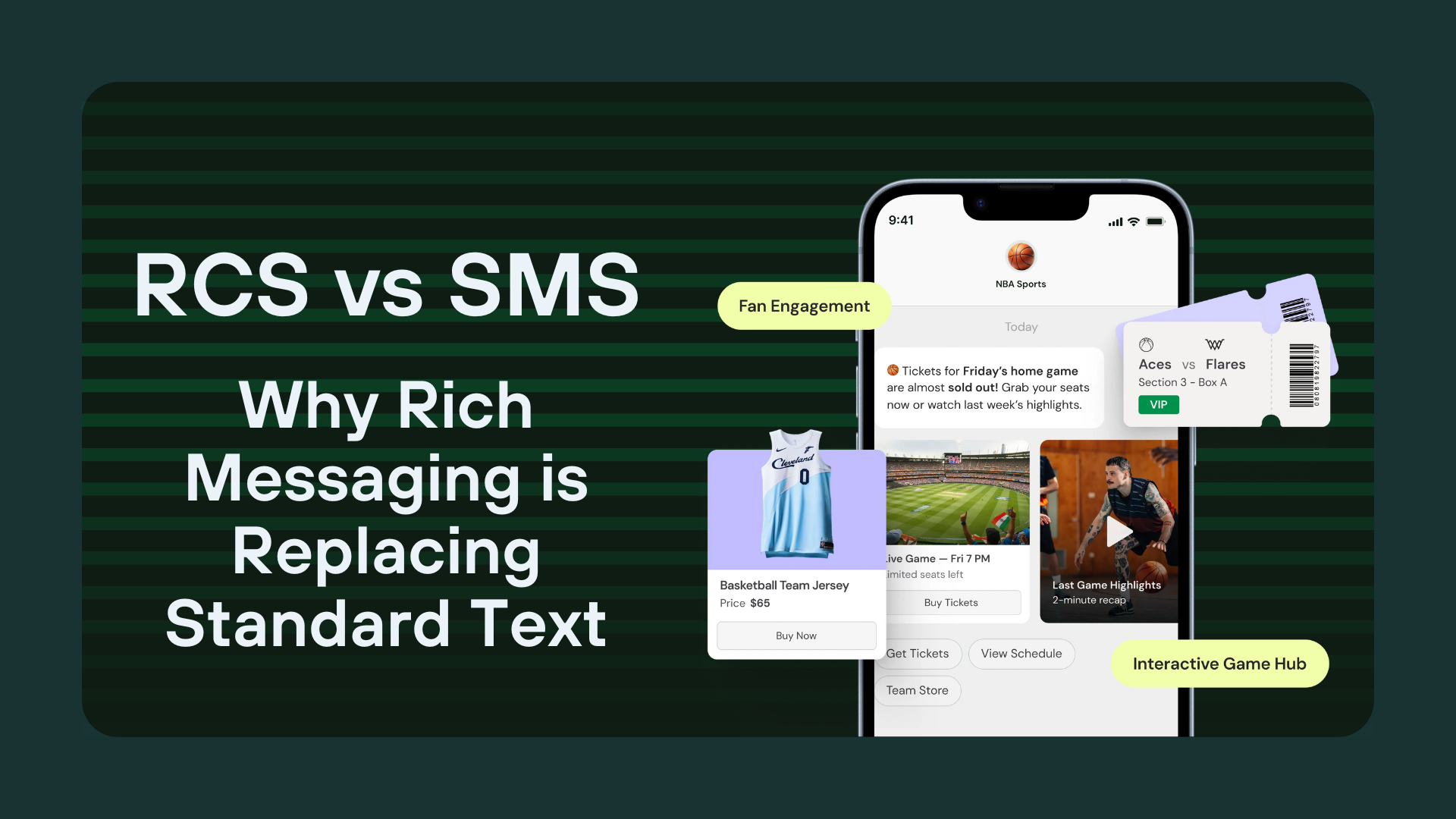
2. Rich Media and Layouts
RCS supports:
- Image and video cards
- Product carousels
- Rich content tiles
- AI integrations
Instead of describing an offer, you can show it. This will keep your audience engaged from the first message until a conversion is completed.
3. Built-In Interactivity
Buttons and suggested replies allow users to:
- Browse options quickly
- Take action without leaving the message
- Move through a guided, trackable journey
This turns messaging from a broadcast channel into a true conversational experience. These features are at the heart of RCS marketing benefits → higher engagement with less friction.
Engagement Metrics: SMS vs RCS Performance
When comparing SMS click-through rate vs RCS, the difference is significant. While SMS campaigns often rely on a single link to click, RCS campaigns give users multiple ways to engage and keep them inside the message experience longer.
Brands using RCS frequently see:
- Higher click-through rates
- Faster time-to-action
- Improved conversion rates
- Lower drop-off between message and outcome
The combination of visuals, branding, and interactivity makes it easier for users to understand the offer and act immediately.
When SMS Still Makes Sense, and When RCS Still Wins
This isn’t an all-or-nothing decision. The smartest brands use both channels strategically.
SMS Is Best For:
- One-time passwords and security codes
- Delivery and appointment alerts
- Emergency or service notifications
- Simple, transactional updates
RCS Is Best For:
- Marketing campaigns and promotions
- Product discovery and launches
- Onboarding and education flows
- Conversational e-commerce campaigns
In the debate of SMS vs RCS for brands, the takeaway is clear: SMS is ideal for alerts. RCS is built for engaging experiences.
Final Takeaway: The Future of Mobile Messaging
To recap, SMS isn’t disappearing, but it’s no longer enough on its own. As customers expect richer, more intuitive mobile interactions, RCS is becoming the natural next step for brands that want to stand out, drive engagement, and convert attention into action. The future of messaging isn’t just about being seen. It’s about being experienced.
Ready to See RCS in Action?
If you’re exploring RCS vs SMS and want to understand how richer messaging experiences can fit into your overall marketing strategy, the best next step is to see it live.
Don’t just take our word for it, see it for yourself. Book a free demo with nativeMsg to learn how RCS for Business can help you create branded, interactive messaging experiences that outperform traditional SMS, without sacrificing any reach or reliability.