
Table of Contents:
First-Party Data Is the New Advantage. Here's How to Actually Collect It.
Published on
August 11, 2026
As third-party cookies are being phased out, privacy features are blocking the pixels that used to follow people around, and ad targeting keeps getting more expensive for less certainty, it's important to have a solution that combats this. The data that will always be reliable is the data your customers give you directly. That is first-party data, and it is has become the advantage that separates brands that can personalize from brands that are guessing.
The catch is that most brands try to collect it with a form, and forms are exactly where the data goes to die. Let's talk about alternative strategies you can use to capture this data and act on it.
What is first-party data, and why does it matter?
In case you aren't familiar, first-party data is information your customers share with you directly, through their own interactions with your brand, with their consent. It is different from third-party data, which is bought or inferred by tracking people across sites they never intended to connect to you.
It matters more now for a few reasons. Tracking is being restricted by browsers and devices, so the third-party datasupply is shrinking. Data you own and collected with permission is durable since it's yours, and it does not disappear when a platform changes its rules. Plus it powers the things that actually drive revenue: relevant offers, accurate segmentation, and retention built on what a customer told you rather than what an algorithm assumed.
There is an even better version of it. Zero-party data is what a customer volunteers on purpose, like a stated preference or an intention. It is the most reliable signal you can get, because they went out of their way to hand it to you.
Why most first-party data collection fails
Brands know they need this data. The collection method is where it breaks down:
- The form bounces --> The average landing page loses about 96% of the paid traffic sent to it. A form sitting on that page inherits the same leak.
- It is one and done --> You capture an email at signup and then never add to the record, so it goes stale and is eventually forgotten.
- There is no natural moment to ask --> Interrupting someone with a data-collection pop-up feels like a toll booth, and people X out of that stuff quickly.
How to actually collect first-party data
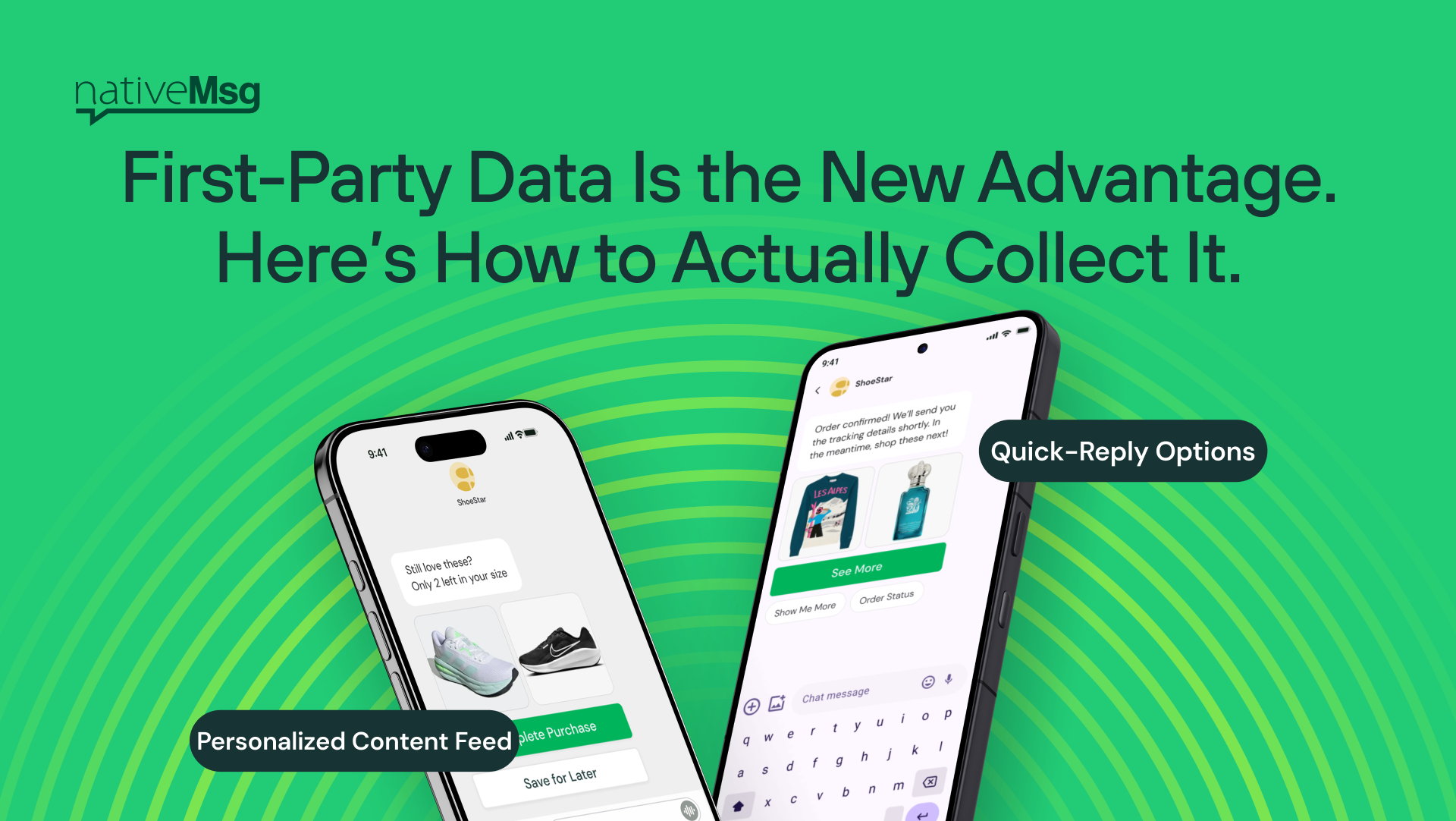
We're biased, but collect it inside of an RCS conversation is the way to go. It's where sharing is a byproduct of engagement rather than a separate chore or demand. A branded messaging thread does this in three ways:
- Identity comes built in --> A message appearing with a phone number, a company name, and a logo in a consented, branded thread is a security green flag. Your know who you are talking to without the need for a tracking pixel.
- Preferences arrive by tap --> A quick-reply question like "What are you shopping for?" with a few buttons collects declared, zero-party data in one tap, no form fill required.
- The record grows over time --> Each interaction adds a little more, so the profile gets richer with every exchange instead of freezing at signup.
The moment to ask is the moment they show up. When someone scans a code, taps an ad, or searches and lands in a conversation, that first exchange is the natural place to learn what they want.
The channel that turns engagement into data
This all runs on RCS (Rich Communication Services), the upgrade to SMS built into the default messaging app on most modern phones. Every tap and reply is identified and consented, and it can flow straight into your CRM. Turning inbound traffic into a conversation instead of a bouncing landing page is exactly what nativeMsg is built to do, which is also how you recover value from the 96% who would otherwise leave without a trace.
The takeaway
The brands with an edge over the next few years will be the ones who own the most useful data about their customers, collected with permission and kept current. You will not get there with a form on a page that most people bounce off of. You will get there by turning engagement into a conversation and letting the data collect itself.
Turn traffic into first-party data. Book a demo to see it work for you.
FAQ
What is first-party data?
First-party data is information customers share directly with your brand, with consent, through their own interactions. You own it, unlike third-party data that is bought or tracked across other sites.
How do I collect first-party data without third-party cookies?
Collect it through direct interactions such as a consented messaging conversation. Replies and quick-reply taps give you identified, permission-based data and preferences without relying on cross-site tracking.
What is the difference between first-party and zero-party data?
First-party data comes from a customer's interactions with you. Zero-party data is information a customer volunteers on purpose, like a stated preference, which makes it the most reliable signal of the two.