
Table of Contents:
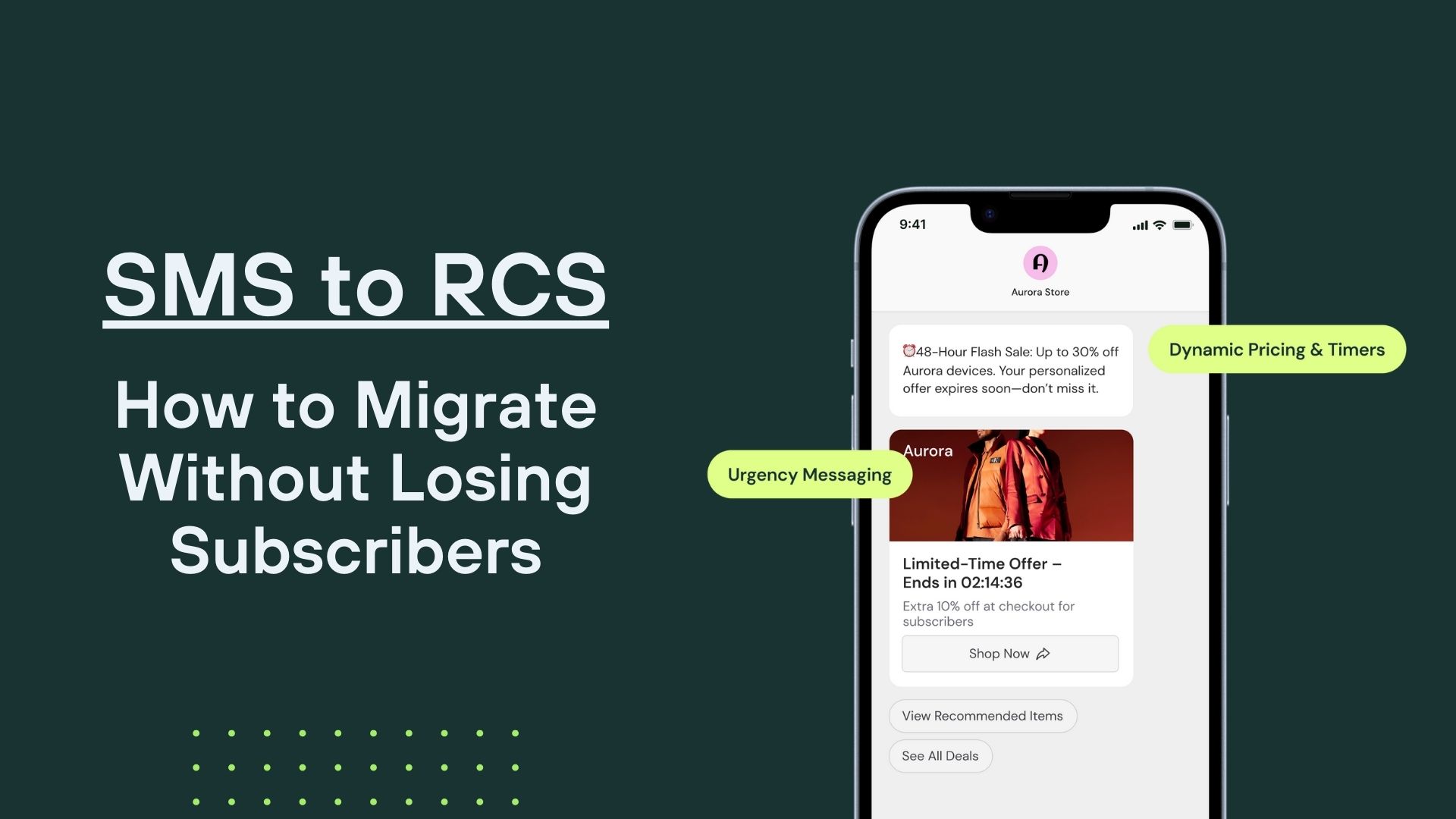
Rich Communication Services (RCS) for Business is quickly becoming the future of messaging. With branded sender IDs, rich media, accurate read receipts, and interactive buttons, RCS delivers experiences that SMS simply can’t match.
But for many brands, one concern stalls adoption. At nativeMsg, we hear “how do we migrate from SMS to RCS without losing subscribers?” quite a lot, and it’s a valid question.
The good news is that a thoughtful RCS migration strategy can enhance engagement without disrupting your existing audience. In fact, when done correctly, RCS migration often increases opt-in confidence, message performance, and long-term subscriber value.
This guide walks through how to migrate from SMS to RCS smoothly, compliantly, and without sacrificing your subscriber base.
Why Brands Are Moving From SMS to RCS
Before diving into the migration process, it’s important to understand why RCS migration is worth the effort.
By upgrading to RCS, you’ll be able to:
- Use a branded sender profile with logos and verified business names
- Send rich media like images, carousels, and videos
- Use Interactive elements such as suggested replies and CTA buttons, all backed by AI
- Capture improved analytics including read receipts, engagement tracking, and user journey mapping
For subscribers, this creates a more trustworthy, app-like experience directly inside their native messaging app with no additional downloads required.
Common Fears Around RCS Migration (and Why They’re Overstated)
Many brands hesitate because they fear:
- Losing their existing SMS subscribers
- Violating consent or compliance rules
- Confusing customers with a new messaging format
These fears are valid but In reality, RCS does not replace SMS overnight. It works alongside SMS, allowing for gradual adoption and fallback strategies that protect subscriber reach.
Step 1: Understand How RCS and SMS Work Together
One of the most important things to know about RCS migration is that it’s not an all-or-nothing switch.
RCS operates using:
- Device compatibility (available on Android and iOS)
- Carrier and network support (AT&T, Verizon, T-Mobile, etc.)
- Our patented fallback system to send SMS versions of messages if RCS is unavailable (due to low reception, carrier exclusions, etc.)
All of this means your subscribers who support RCS will receive rich messages while everyone else in your subscriber list will continue to receive standard SMS messages. No one is dropped. No opt-in is lost.
Step 2: Audit Your Existing SMS Opt-Ins
Before starting your RCS migration, review your current SMS program:
- How were subscribers opted in? (web forms, keywords, checkout, etc.)
- What disclosures were used at the time of opt-in?
- Are your opt-ins brand-specific and compliant?
Globally, existing SMS consent extends to RCS because RCS is an evolution of messaging, not a new channel. Still, documenting consent and aligning with carrier policies is essential.
Step 3: Use Transparent Messaging to Build Trust
While not a requirement, transparency with your audience is important during RCS migration. You should let subscribers know your messages will look richer and more interactive, and that they’re still in control of their preferences.
When your RCS channel is up and running, here’s an example SMS or RCS message to send to your subscribers:
Hi! We’re upgrading our messages to bring you richer content and easier ways to interact with {your company or brand name here}. Nothing changes about your subscription, just a better experience. We can’t wait for you to see our new creations!
This reassurance dramatically reduces confusion and opt-outs, gets them excited about the future of your comms, and you can even include a promo offer with the announcement to really drive conversions.
Step 4: Start With a Soft RCS Rollout
A phased RCS migration is the safest approach. Our best practices include:
- Launching RCS on low-risk campaigns (order updates, account notifications, etc.)
- Testing engagement and delivery rates before promotional use
- Comparing performance between SMS and RCS audiences
This allows you to gather data, optimize content, and demonstrate internal ROI, without risking subscriber churn.
Step 5: Design RCS Messages That Add Real Value
One mistake we’ve seen brands make during RCS migration is treating RCS like “SMS with images.” While images is a part of it, RCS works best when you:
- Use buttons instead of long URLs, making your messages look less spam-y
- Replace multi-message flows with carousels, similar to PDF slideshows on LinkedIn
- Enable quick replies for common actions
When subscribers experience clear benefits (faster actions, better visuals, less friction) they’re far less likely to opt out.
Step 6: Maintain Clear Opt-Out and Preference Controls
Subscriber control is non-negotiable. This may go without saying but during and after RCS migration, you should remember to:
- Keep opt-out language visible
- Ensure STOP, HELP, and preference links work consistently
- Honor opt-outs across both SMS and RCS
A seamless unsubscribe experience actually builds trust and reduces long-term churn.
Step 7: Monitor Metrics That Matter During RCS Migration
Success isn’t just about delivery, it’s about engagement. Here are some key metrics to track:
- Read rates vs. SMS open estimates
- Button click-through rates
- Conversion rates from interactive flows
- Opt-out rates before and after migration
One RCS is properly implemented, your brand will start to see higher engagement and equal or lower opt-outs too.
Step 8: Prepare for an RCS-First Future
While SMS isn’t disappearing anytime soon, carriers and platforms are clearly investing in RCS as the next standard. A smart RCS migration today future-proofs your messaging strategy, improves brand trust with verified messaging, and creates richer customer experiences at scale. By migrating thoughtfully, you gain innovation without sacrificing reach.
Final Thoughts: RCS Migration Is an Upgrade, Not a Risk
Migrating from SMS to RCS doesn’t mean starting over, it means building upon the trust you’ve already earned.
With the right strategy, subscribers will stay subscribed, engagement will go through the roof, and your messaging program will become more resilient and future proof.
RCS migration isn’t about abandoning SMS, it’s about evolving it. If you’re ready to make the leap from SMS to RCS, schedule a demo with us and we’ll show you what’s possible.