
Table of Contents:
AI-Powered Personalization in RCS: Turning Messages Into Dynamic Customer Experiences
Published on
January 22, 2026
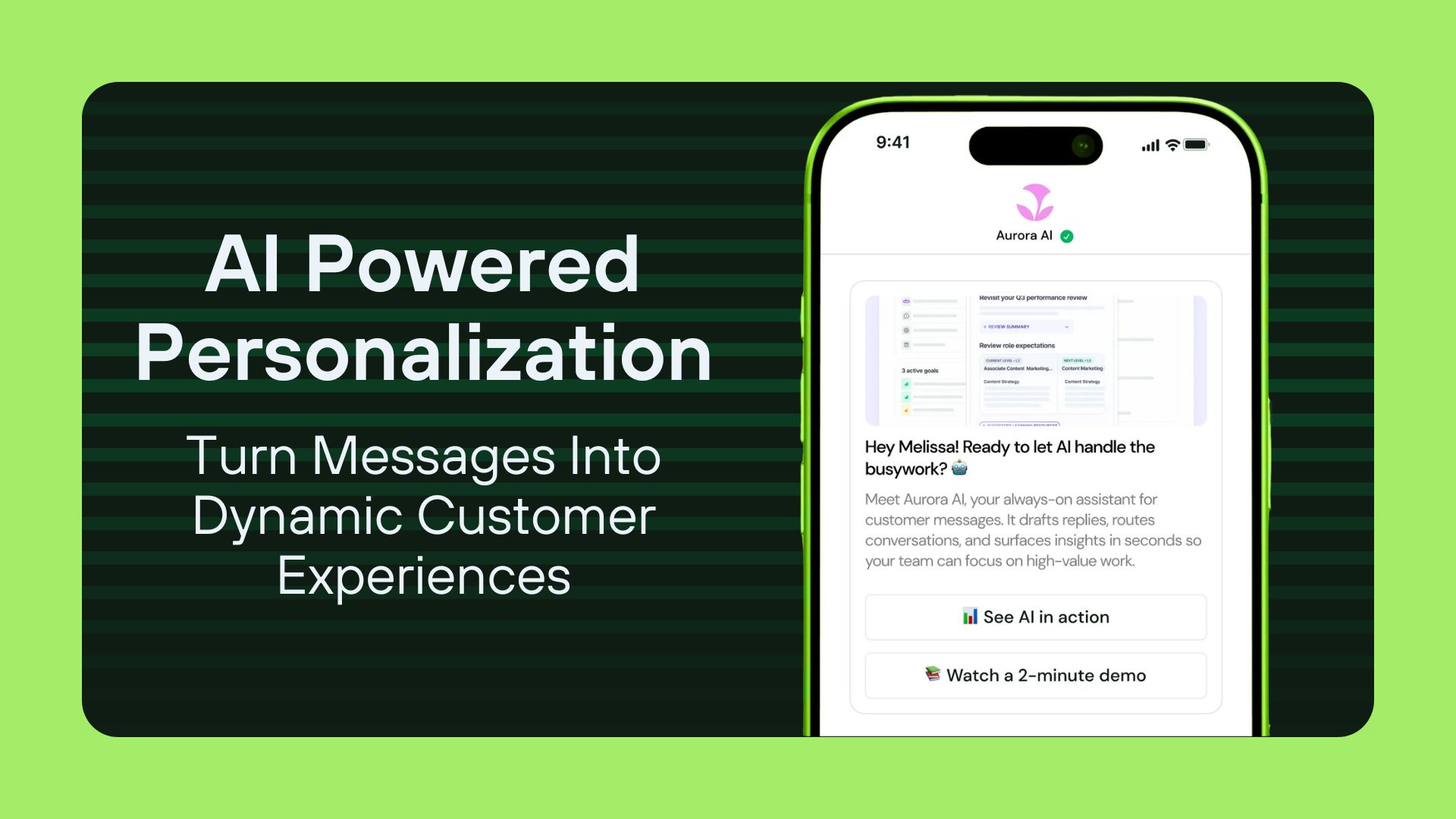
Customers no longer respond to one-size-fits-all messaging. They expect brands to understand context, intent, and timing, especially in high-attention channels like messaging.
That’s where AI-powered RCS personalization comes in and changes the game.
By combining RCS (Rich Communication Services) with artificial intelligence, brands can move beyond static campaigns and deliver dynamic, real-time customer experiences directly inside their native messaging apps. The result is messaging that feels helpful, relevant, and conversational, not promotional.
This blog explores how RCS personalization works, why AI is essential to scaling it, and how brands can use it to drive measurable engagement and conversion in a digestible, bulleted format.
Why Personalization Matters More in Messaging
Messaging is one of the most personal digital channels. Unlike email or ads, messages arrive in a space reserved for conversations with friends, family, and trusted brands. Because of that, irrelevant messages feel intrusive.
Effective RCS personalization helps brands:
- Reduce message fatigue
- Increase engagement without increasing message volume
- Build trust through relevance
- Drive faster actions with less friction
While it’s not 100% necessary to incorporate AI into your messaging, it does make this level of personalization possible at scale.
What Makes RCS Personalization Different From SMS
SMS personalization is typically limited to:
- First-name insertion
- Basic segmentation
- Static links
RCS personalization goes much further by enabling:
- Rich media tailored to user preferences
- Dynamic buttons based on intent and user journey
- Context-aware content within a single introductory message
- Two-way interactions (with AI assistance) that adapt in real time
Instead of sending a message to a customer, RCS allows brands to create a memorable experience with them.
The Role of AI in RCS Personalization
AI is the engine that transforms RCS from rich messaging into intelligent messaging. When combined with RCS, AI can:
- Analyze user behavior and historical interactions
- Predict intent and next-best actions
- Dynamically assemble message content
- Adapt conversation flows in real time
This turns each message into a living experience that responds to the customer, not just a pre-built campaign.
Key Use Cases for AI-Powered RCS Personalization
1. Dynamic Content Based on Customer Context
AI-driven RCS personalization allows messages to change based on:
- Location
- Time of day
- Purchase history
- Browsing or app behavior
For example, two customers receiving the same experience may see:
- Different images
- Different CTAs
- Different offers
Why it matters: Relevance increases engagement without increasing message volume.
2. Personalized Buttons and Suggested Replies
RCS supports buttons and suggested replies, and AI decides which ones to show.
Instead of presenting every option, AI can:
- Highlight the most likely action
- Remove unnecessary choices, reducing decision paralysis
- Adjust replies based on past behavior
Why it matters: Fewer decisions crafted by tailored options lead to faster conversions.
3. Adaptive Conversation Flows
AI-powered RCS personalization enables conversations that evolve in real time. As users interact, AI can:
- Change follow-up messages on the fly
- Skip irrelevant steps in the journey to purchasing
- Route users to support, sales, or self-service paths if necessary
Why it matters: Customers get what they need faster without repeating themselves in multiple channels to multiple people.
4. Personalized Rich Media Experiences
Images, carousels, and videos don’t have to be static. With AI, brands can personalize:
- Product recommendations
- Visual layouts
- Promotional content
Why it matters: Visual relevance increases emotional engagement and recall.
5. Predictive Timing and Frequency Optimization
AI doesn’t just personalize what you send, it personalizes when you send it. Using first party engagement data provided by your audience in real-time, AI can:
- Predict optimal send times
- Reduce over-messaging
- Pause campaigns for disengaged users
Why it matters: Better timing improves engagement while protecting subscriber trust.
How RCS Personalization Creates Better Customer Experiences
When done right, RCS personalization doesn’t feel like marketing, it feels like service. Customers will experience:
- Fewer but more relevant messages
- Faster resolution and decision-making
- Clear, intuitive interactions
- A sense that the brand “knows” them
Which leads to:
- Higher engagement rates
- Lower opt-out rates
- Stronger long-term customer loyalty
Measuring the Impact of RCS Personalization
One of the advantages of RCS personalization is measurability. Brands can track:
- Read rates at an individual and campaign level
- Button and reply engagement
- Conversation completion rates
- Conversion rates tied to personalized flows
AI continuously learns from this data, improving personalization over time.
Getting Started With AI-Powered RCS Personalization
To implement RCS personalization effectively, brands should:
- Start with high-intent use cases (orders, support, renewals)
- Define personalization signals (behavioral, transactional, contextual)
- Use AI to guide the experiences
- Test and iterate based on real interaction data
The goal here isn’t complexity, it’s clarity.
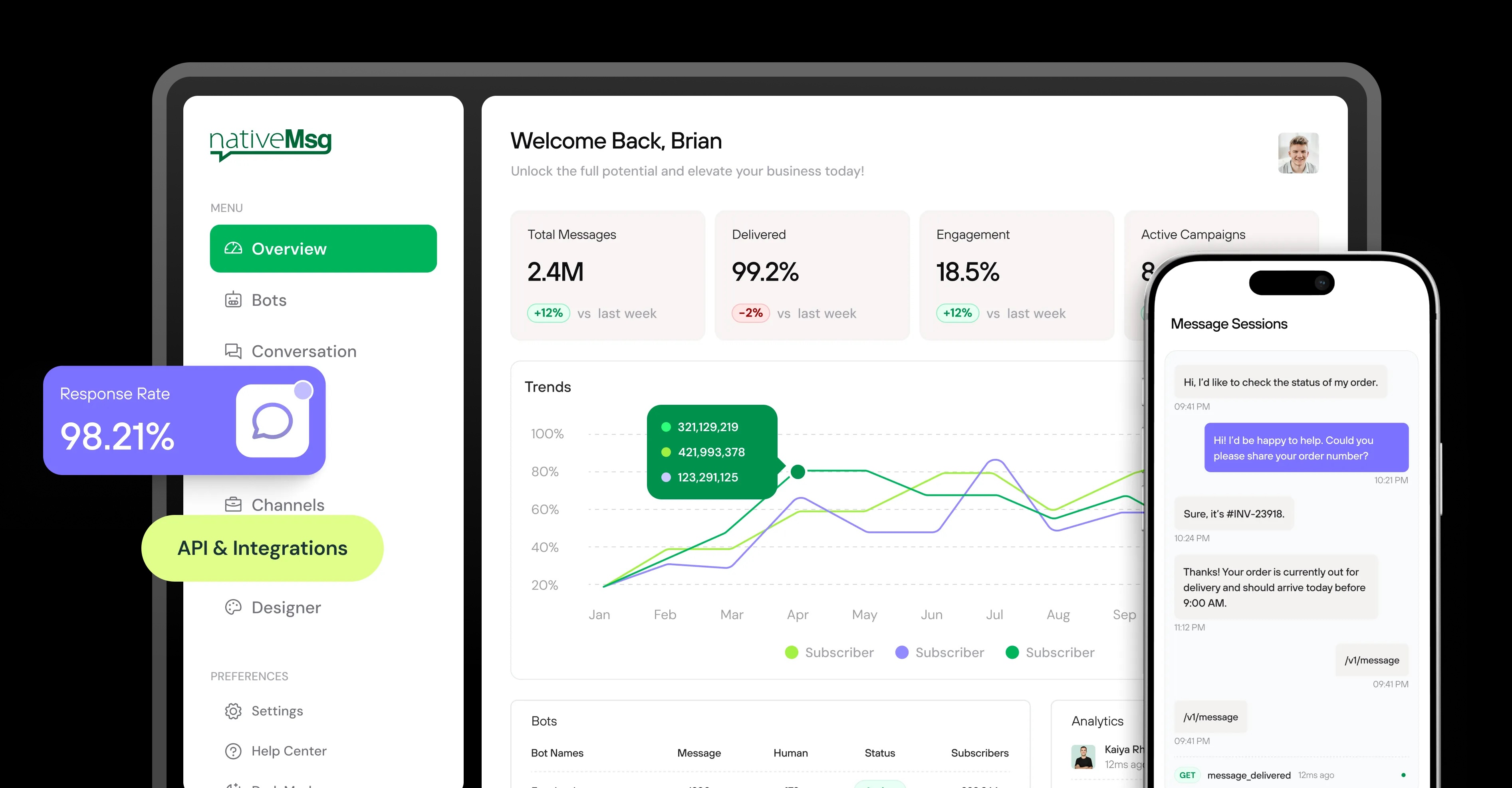
How nativeMsg Integrates With Any AI System
One of the biggest challenges brands face when adopting AI-powered messaging is integration. Many platforms require retraining models, rebuilding workflows, or changing how existing AI tools operate. Luckily for you, nativeMsg removes that friction entirely.
nativeMsg is designed to integrate seamlessly with any AI system you are already using, whether that’s a proprietary model, a third-party AI platform, or a hybrid approach. Instead of forcing you to retrain or reprogram your AI, nativeMsg plugs into your orchestration layer that connects your already established intelligence directly to RCS experiences.
With nativeMsg, brands can:
- Plug existing AI models into RCS conversations instantly
- Apply AI-driven decisions to message content, buttons, and flows without rewriting logic
- Maintain full control over how AI influences customer experiences
- Scale personalization across campaigns without disrupting current systems
Because nativeMsg works with your existing AI stack, teams can focus on improving customer experiences rather than rebuilding infrastructure. The result is faster deployment, consistent performance, and AI-powered RCS personalization that behaves exactly how your brand intends.
In short, nativeMsg doesn’t replace your AI, it amplifies it, turning intelligence into seamless, dynamic messaging experiences across every customer interaction.
Final Thoughts: RCS Personalization Is the Future of Messaging
As customer expectations rise, generic messaging becomes invisible. AI-powered RCS personalization gives brands a way to:
- Deliver relevance at scale
- Turn messages into experiences
- Build trust through intelligent interactions
RCS isn’t just richer than SMS—it’s smarter. And with AI-driven personalization, messaging finally becomes as dynamic as the customers it serves.
If you’re ready to move beyond static campaigns and see how AI-powered RCS personalization works in real time, nativeMsg can help. Our platform integrates seamlessly with your existing AI systems, allowing you to activate intelligent, personalized messaging without retraining or reprogramming your tools.
Book a demo with nativeMsg to see our platform and AI in action, and discover how you can turn every message into a meaningful customer experience.